Catalogo Boardgames
Esplora la nostra collezione di giochi da tavolo
Tutti i Giochi
662 giochi trovati
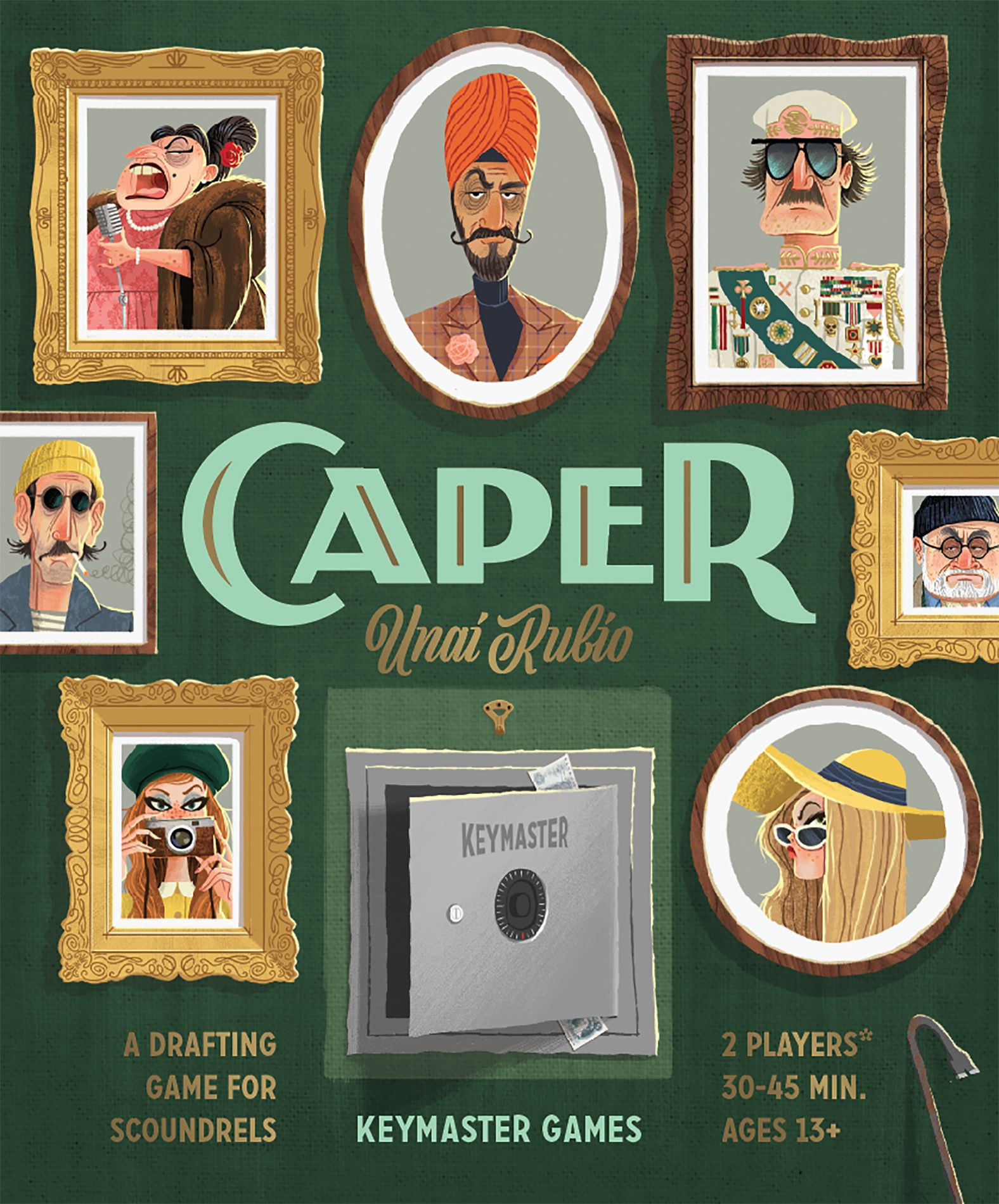
Caper
Caper is a two-player card strategy game in which each player recruits thieves, equips them with gear, and tries to steal from popular places across Europe. Caper plays over six rounds with a colorful, quirky design that combines card drafting and set collection with area control. Players are met with challenging decisions such as drafting particular thieves, giving them specific gear, and stealing precious works of art. The game changes depending on what city you're playing in, giving you unique ways to play every time.
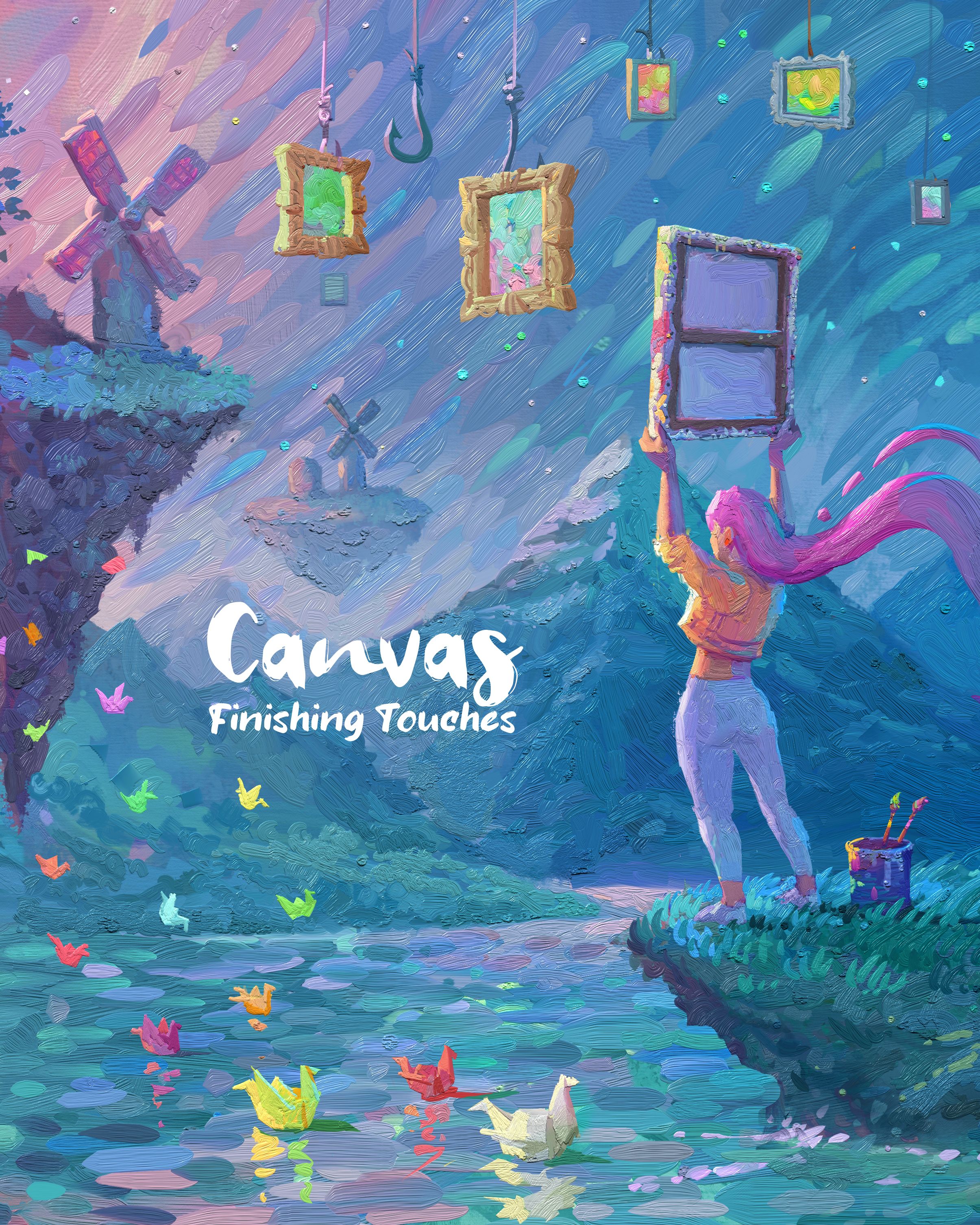
Canvas: Finishing Touches
The gallery is seeking new masterpieces! In Canvas: Finishing Touches, complete your works of art and show them off to the world with the new Frames! These Frames add a layer of interaction as players compete to have their work displayed on the gallery wall. Also features: Platinum Ribbons - Grab a Platinum Ribbon whenever your painting is framed in the gallery. New Scoring Cards for puzzling new challenges and added replayability.
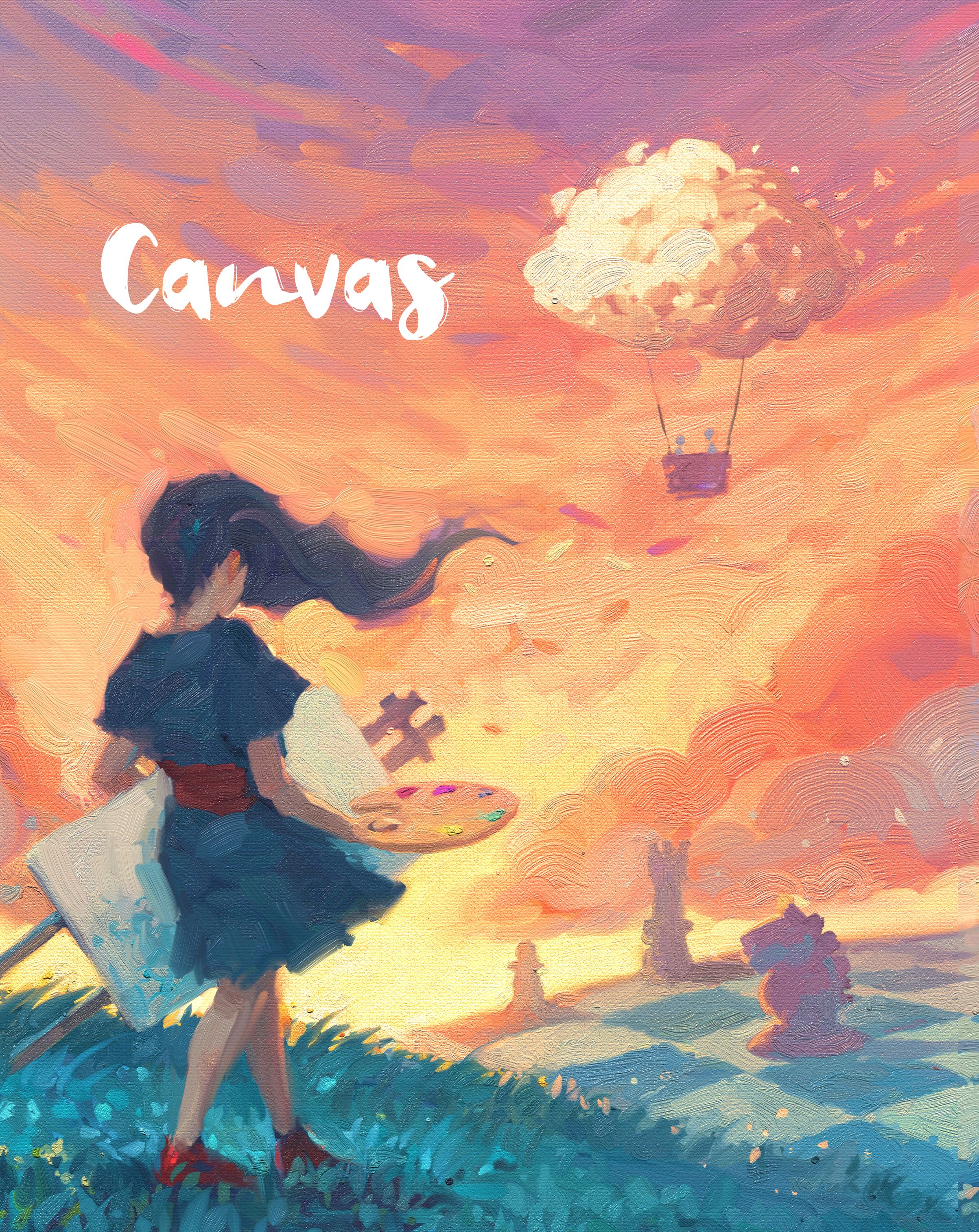
Canvas
In Canvas, you play as a painter competing in an art competition. Players will collect art cards, layering 3 of them together to create their own unique Painting. Each card contains a piece of artwork as well as a set of icons used during scoring. Icons will be revealed or hidden based on the way players choose to layer the cards making for an exciting puzzle. Paintings are scored based on a set of Scoring cards which will change each game. Once players have created and scored 3 paintings the game ends. On your turn you may take an Art card or make a painting. Art cards are selected from a row of cards in the center of play. Each of these cards has a cost associated with their position. After selecting an Art card you must pay its cost by placing an Inspiration token on each of the cards to its left. If you do not have enough Inspiration tokens, you may not select that card. Any tokens on the card you have selected are kept for future turns. The far left card costs no Inspiration tokens to take. If you have three or more Art cards you may choose to make a painting. Select 3 of your art cards, arrange them in any order and then score them by comparing the visible icons on your painting to the Scoring conditions. Once all players have made 3 paintings the game ends. The player with the most points wins! —description from the publisher
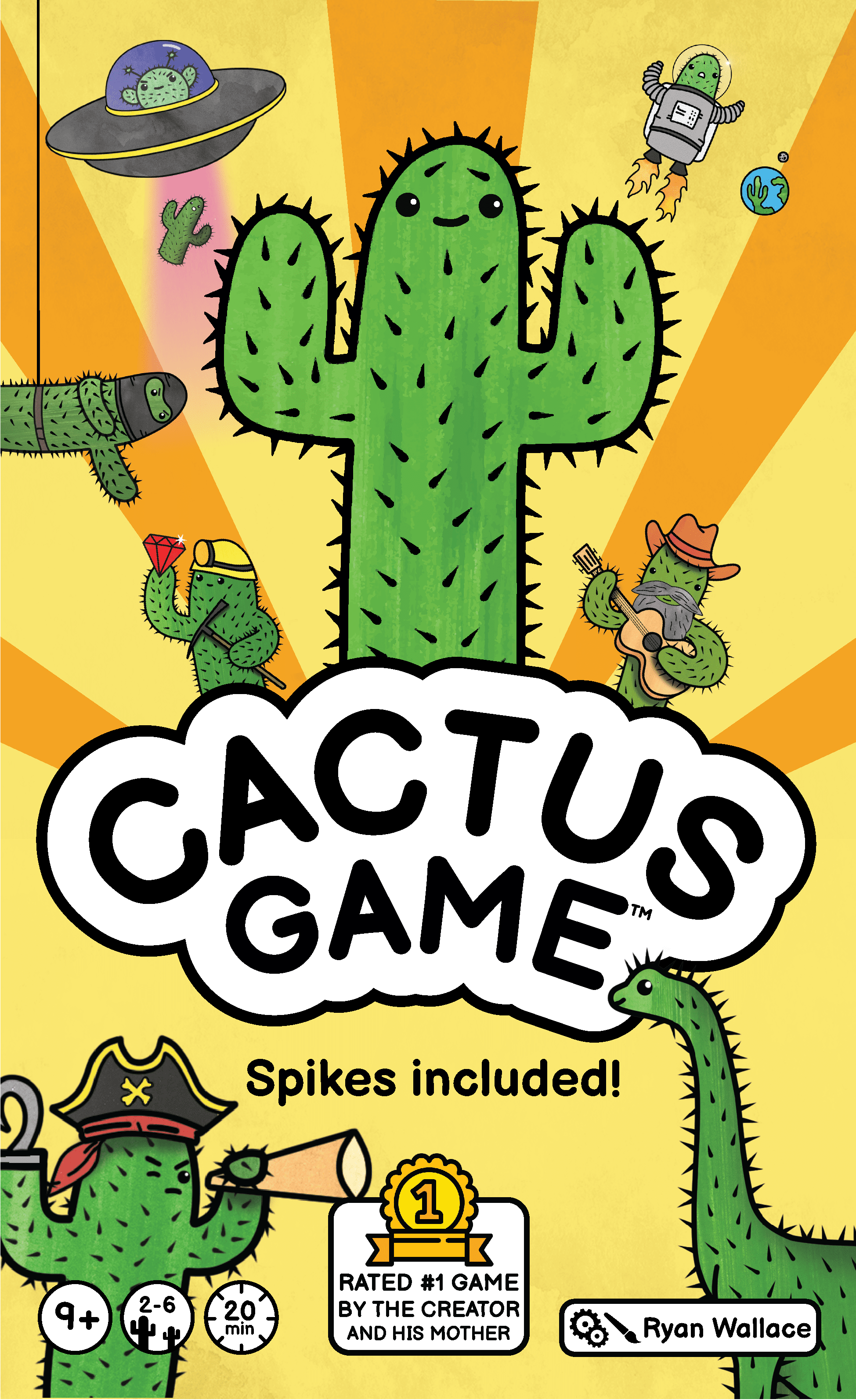
Cactus Game
Cactus Game is a quick, interactive card game where players compete to collect the most Point cards by assembling sets of cactus characters and using action cards to disrupt their opponents. With simple rules and lively player interaction, it offers a mix of strategy, timing, and luck. On your turn, you may play cards until you either gain a Point card or draw a card, which immediately ends your turn. Players score points by playing sets of three matching Character cards, with stronger characters earning more points, and Wild cards helping complete sets. Action cards add variety by allowing players to steal cards or points, swap hands, or block actions with well-timed “Stop” cards. The game ends as soon as a player reaches the required number of Point cards based on the number of players. That player wins immediately. —description from the publisher
Cachamot
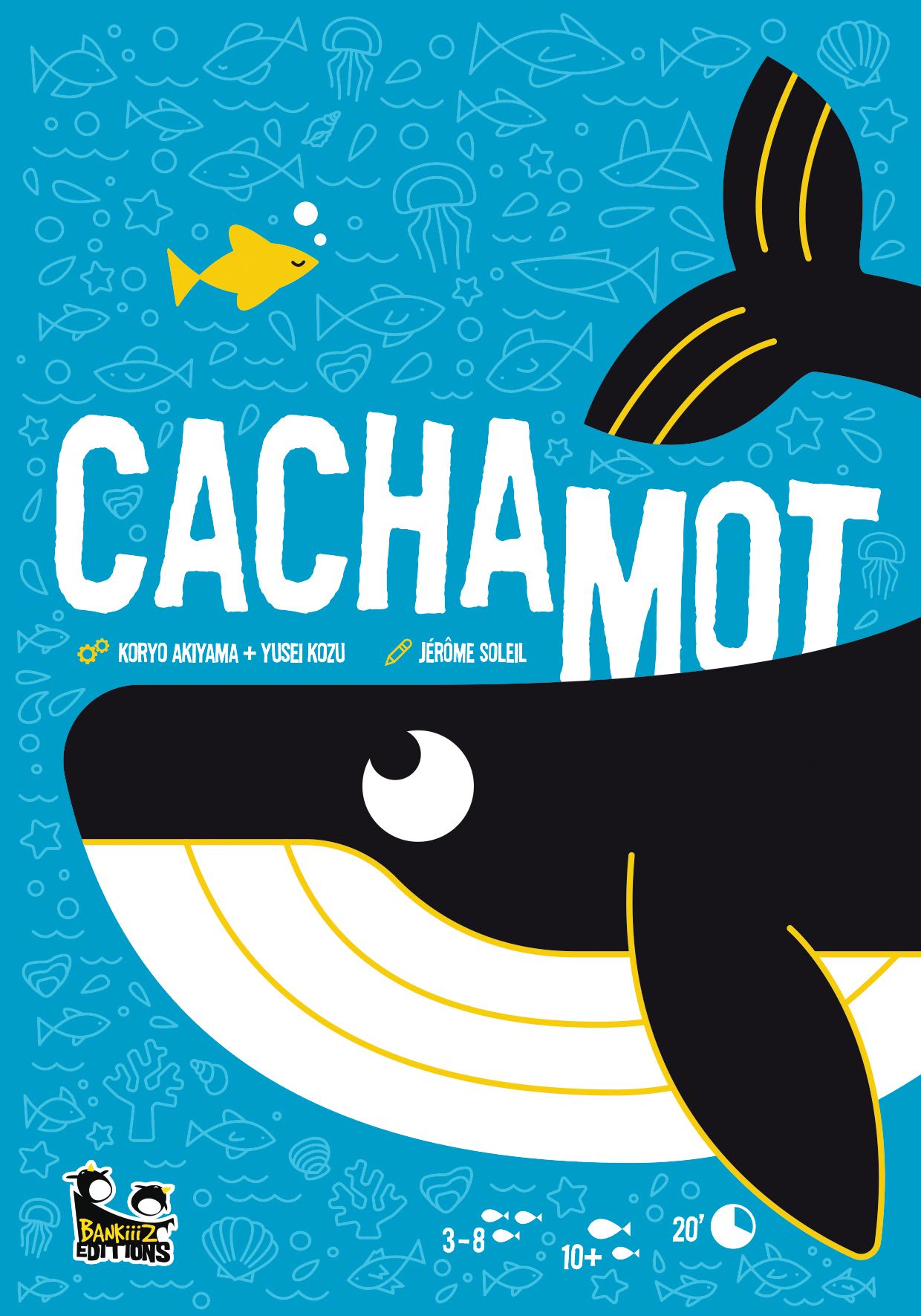
Cachamot is a deduction game in which players must guess the last word of a 3-word sequence made by another player. The only clues available to them are the whole first word and the first letter of the other two! If no one guessed right after one try each, reveal more letters and try again. Players earn points by being the first to guess the word, or by designing riddles that other players will successfully guess… but not too easily! —description from the publisher
Boreal
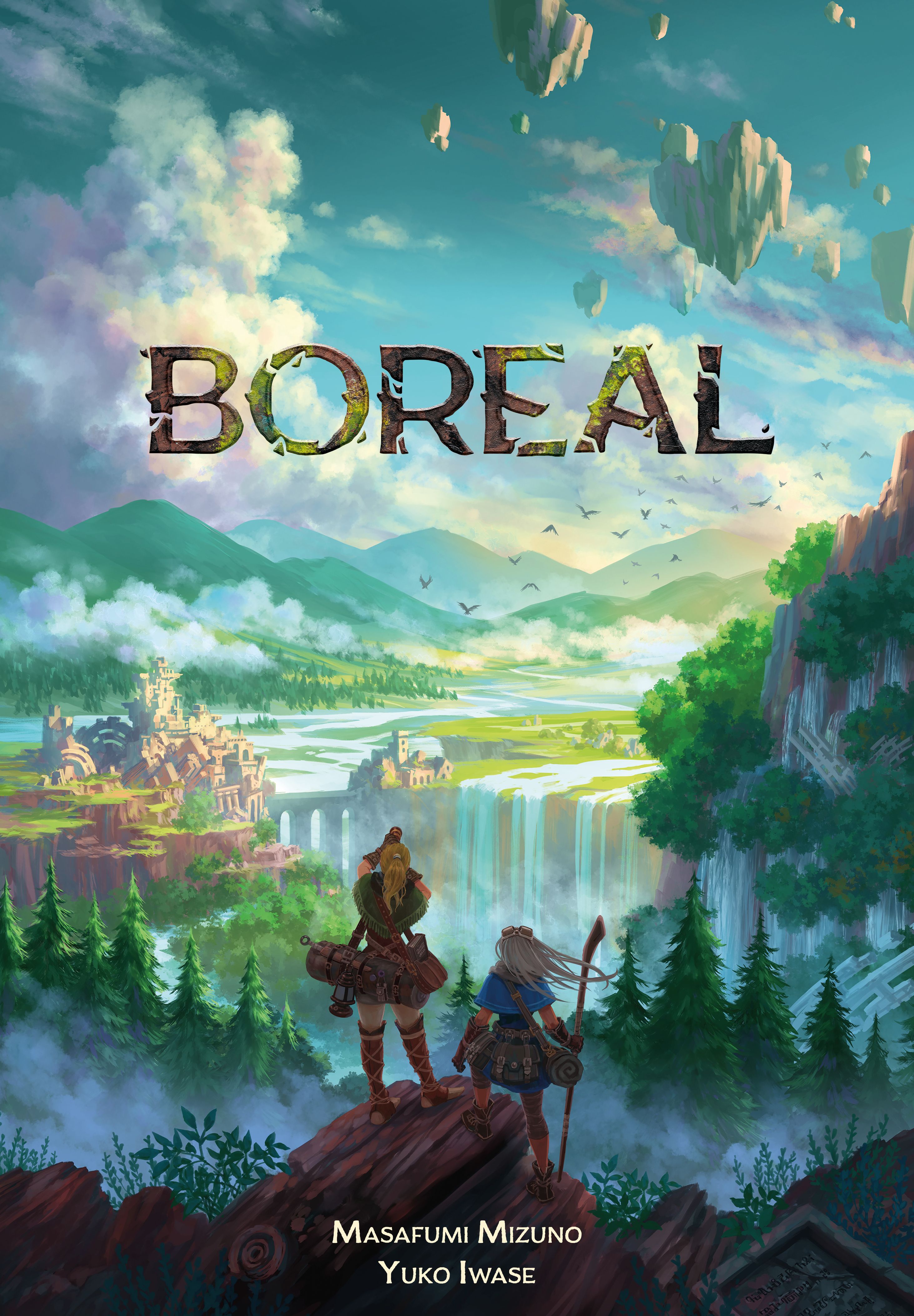
In Boreal, two adventurous women explore the ruins of the ancient world in search of knowledge. On their turn, players draft cards from a common river (or reserve a card) to try to get the ruins cards that bring the most knowledge. Depending on how many resources players have, they will have access to a limited number of cards, possibly all of them. After one or both players have reached ten cards, the game ends, and whoever has the most knowledge wins. —description from the publisher
Blind Jack
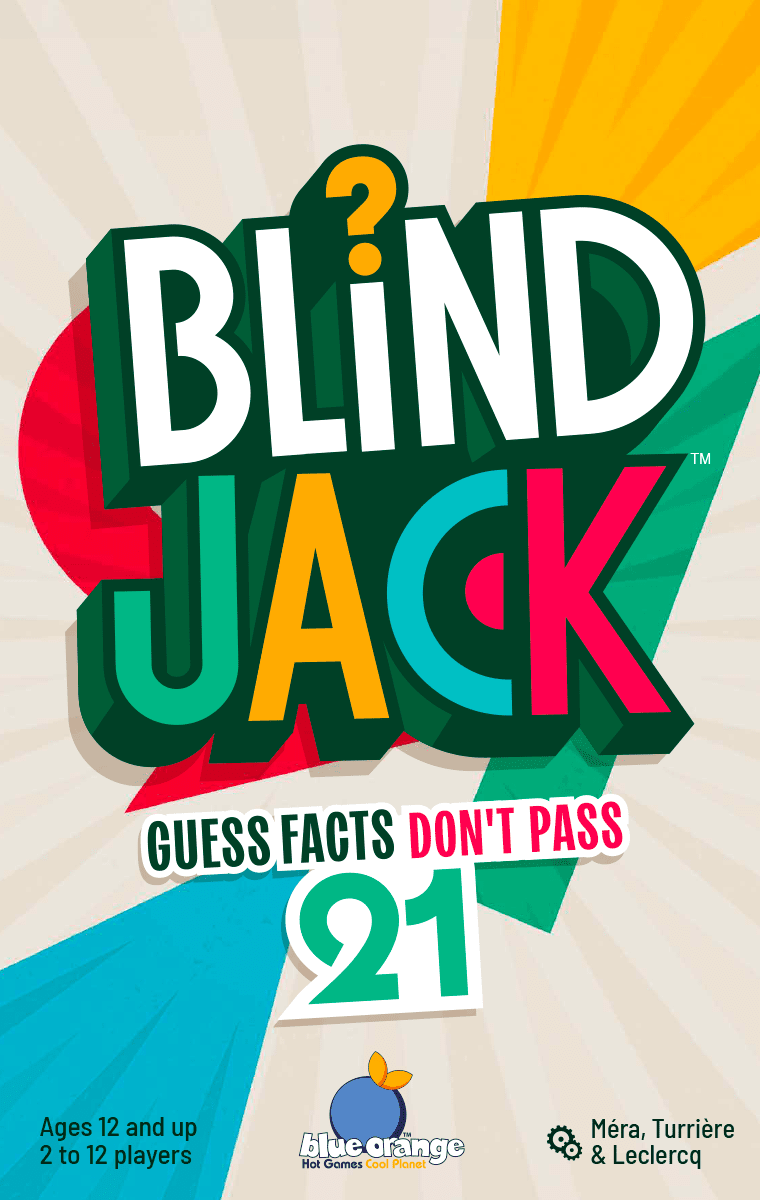
Blind Jack is a fast-paced team game where players guess numerical answers to quirky trivia, aiming to get as close as possible to 21 without going over. Teams take turns estimating the answer to a card’s question—ranging from the number of legs on a crab to the number of colors on Superman’s costume—while the real answer is revealed only to the opposing team. Players must balance risk and strategy, deciding whether to keep drawing cards to reach 21 or stop before going over. The team whose total is closest to 21 wins, with ties and overages resolved through clear rules. Simple to learn but full of tense, hilarious moments, Blind Jack challenges estimation, teamwork, and quick thinking in every round. Perfect for small groups, it offers a mix of trivia, strategy, and suspense that keeps players guessing until the very last card. —description from the publisher
Black Sonata: The Fair Youth
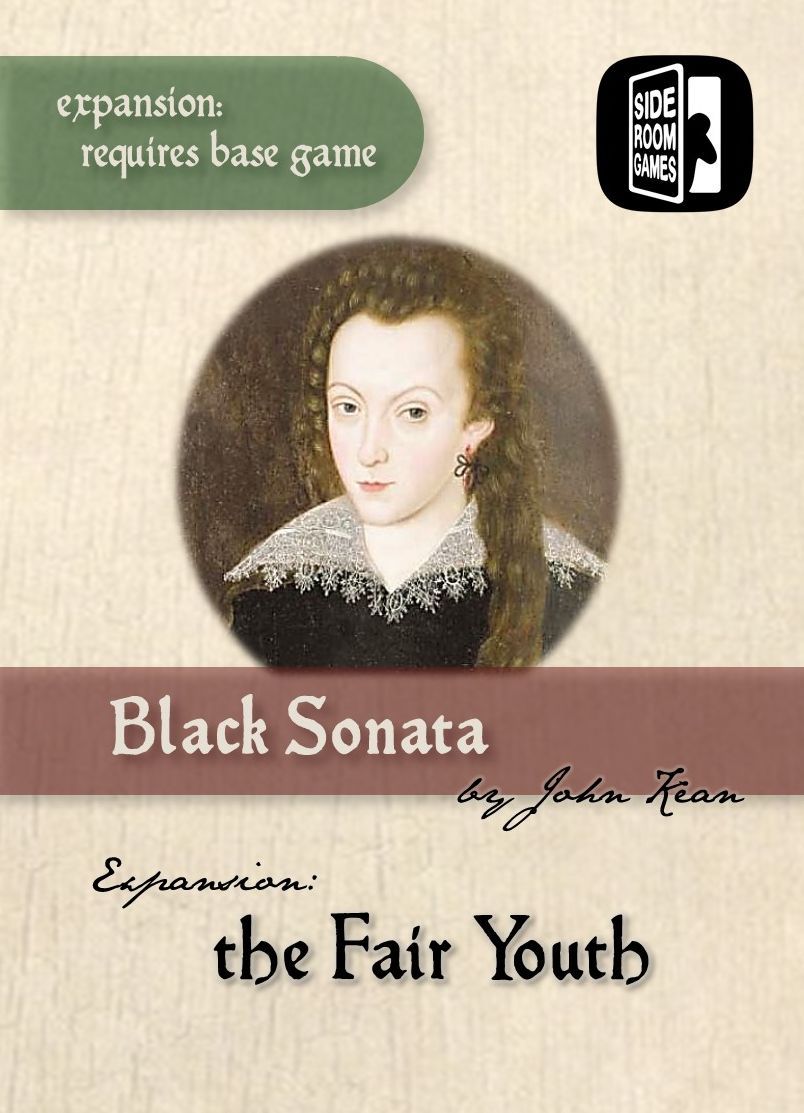
This set of mini-expansions adds new tools and challenges to the base game. Each expansion can be played separately or in combination with any other. The Fair Youth expansion adds an additional deduction task to the game: you must discover where in London the Fair Youth is hiding. Bystanders will give you a clue for which way the Youth went from your current location, but if you are already at his actual location you will be told a lie. Deduce his location to surprise him there, or for extra points catch him and the Dark Lady together, unmasking them both at the same time. The Rendezvous challenges you to discover which of seven landscape features acted as a meeting place for Shakespeare and his Dark Lady. Querying a location gives you a number from 1 to 3, being the number of steps away from the current location that the Rendezvous symbol can be found. Deduce which map symbol represents the Rendezvous, then confront and unmask the Dark Lady in a location with that symbol at it. The Rival Poet adds a second pawn that stalks the streets and interacts with the player via simple movement rules. Choose from two different poets to make the game easier or harder. The Elusive Poet tries to stay one step ahead of you, but if you catch him he will reveal a clue about the Dark Lady. In contrast, The Aggressive Poet hounds and chases you, potentially spoiling your plans to intercept the Dark Lady. Waypoints and Traces gives you two tools to mark and track the Dark Lady's location at a particular point in the stealth deck. And The Darker Ladies replace the clue cards in the base game, giving each Dark Lady a new set of characteristics and presenting a slightly harder deduction challenge. —description from the designer
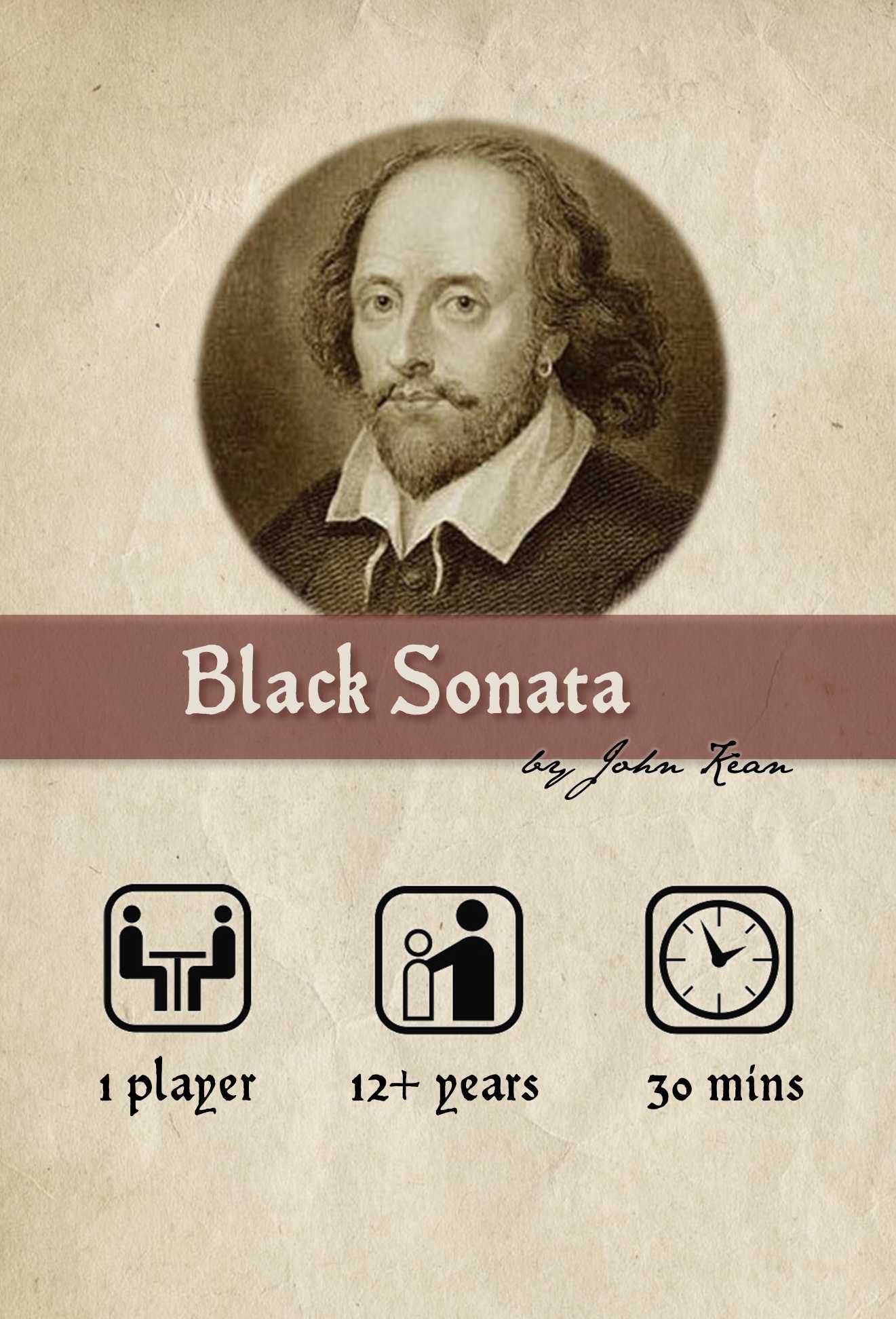
Black Sonata
For more than four centuries scholars have argued over the identity of the mysterious Dark Lady of William Shakespeare's sonnets. According to the sonnets, the Dark Lady seduced the poet and held him in an agonised thrall while also conducting an affair with the Fair Youth whom Shakespeare also loved. In Black Sonata you will find yourself in Shakespeare's London, circa 1600, in pursuit of the shadowy Lady. A specially ordered deck of cards determines her hidden movements from place to place. You must deduce her location and then intercept her to catch a glimpse and gain a clue to her identity. You will need several clues to deduce her identity, but with each clue gained the Lady becomes harder to track. Black Sonata combines hidden movement and logical deduction into a unique solitaire steeped in literary history. Can you finally solve English literature's greatest mystery? Or will the Dark Lady elude you, melting from your grasp like a curl of smoke and promises?
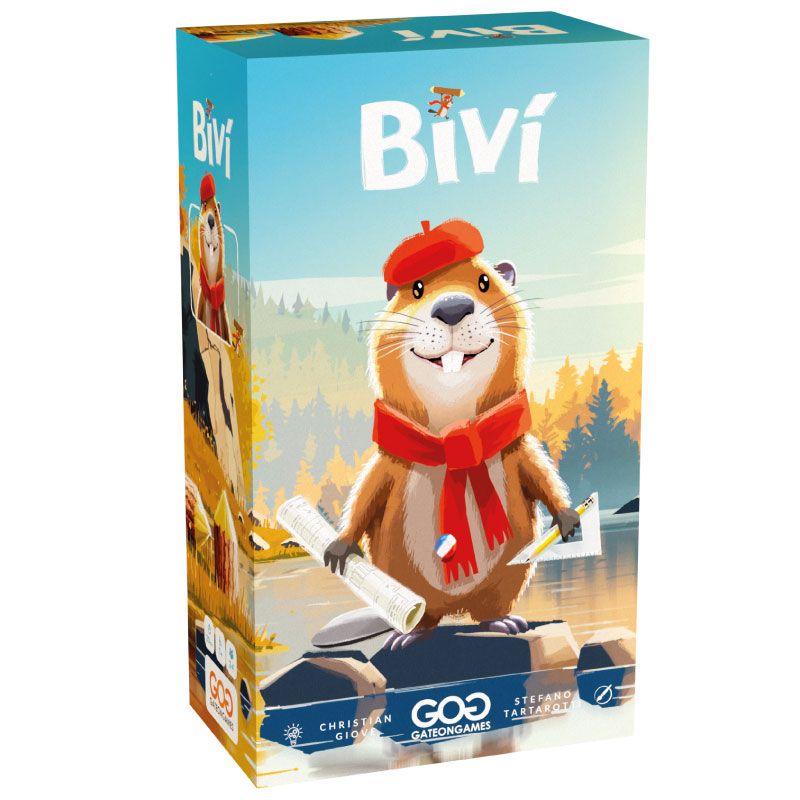
Bivì
Dive into the charming world of beavers in this delightful puzzle strategy game for the whole family. In Bivì, you become part of a beaver community dedicated to constructing the most efficient and stable dam along a serene stream. Surrounded by lush forests, your task is to transform nature's resources into engineering masterpieces. The game revolves around placing colorful polyomino tiles to optimize space and achieve stability. Each turn introduces new challenges, testing your planning skills and creativity. Rules are easy to grasp, but mastering the strategy will keep you coming back for more. Highlights: Charming and immersive theme: Beavers are brought to life through beautiful art and thematic mechanics. Accessible strategy: Simple yet deep gameplay appeals to a wide audience. High replay value: Variable layouts and objectives ensure no two games are the same. —description from the publisher
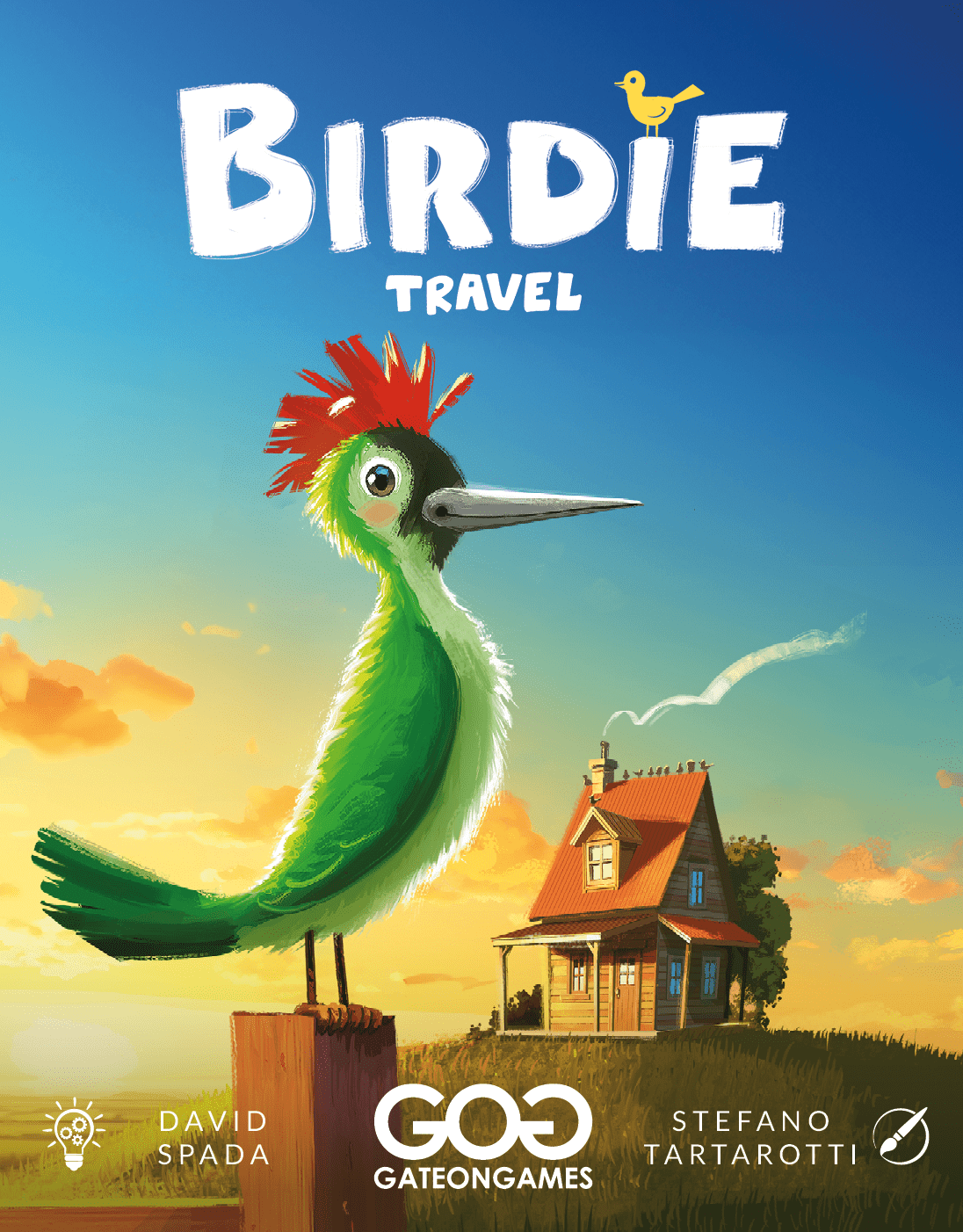
Birdie: Travel
Birdie Travel is a compact memory and set-collection game in which players gather sets of birds and seasons. Success depends on remembering which cards have already been collected and in what order, as careful planning is required to create effective combinations and score the most points. Its small, portable components allow for quick setup and play anywhere, while attention and strategy are central to the gameplay. —description from the publisher
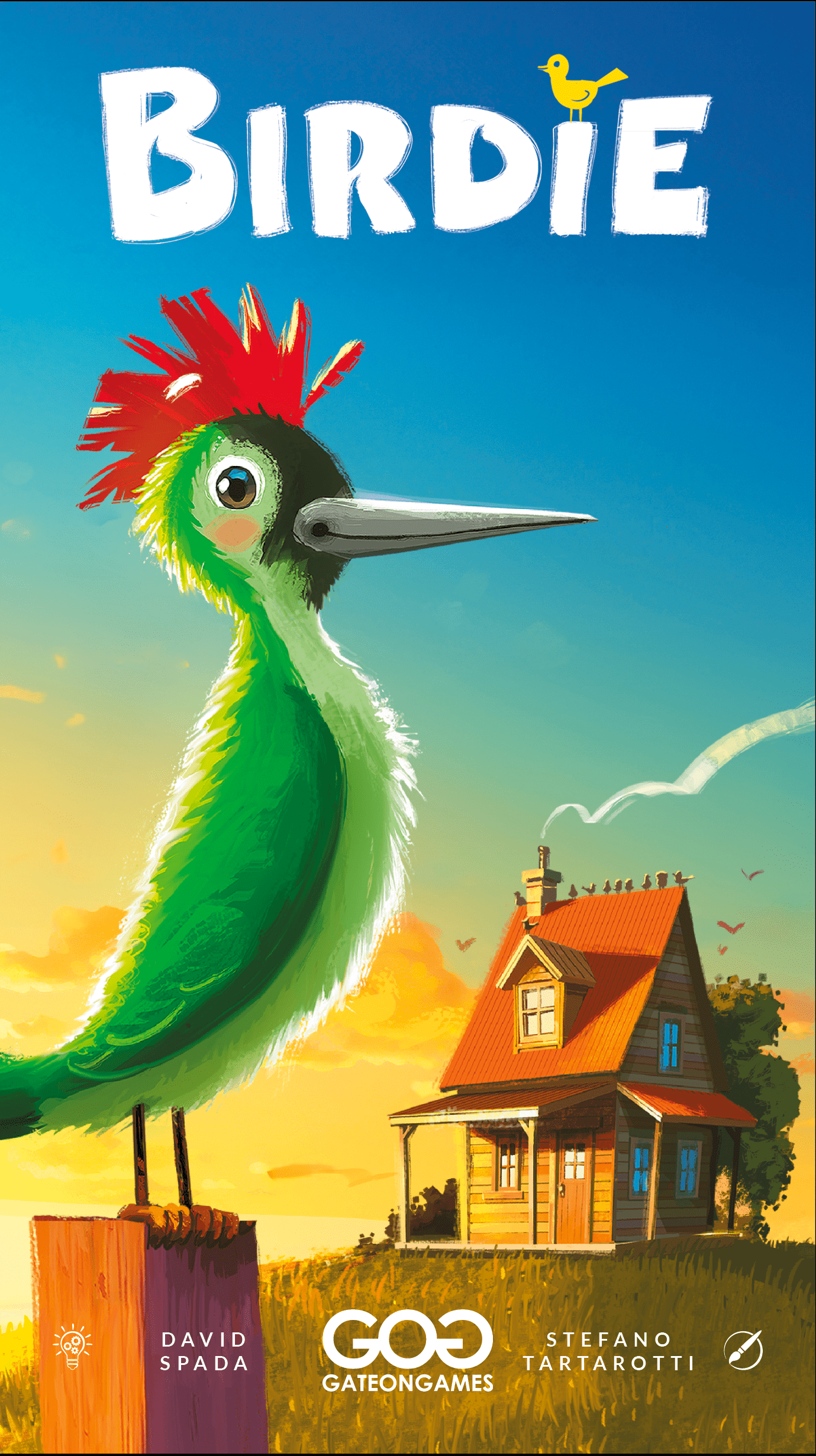
Birdie
Discover the magic of a peaceful house on a quiet hill. By day, you admire the flight of the robin, woodpecker, and pigeon. By night, you listen for the call of the owl. But will you know how to get them all to get along? In Birdie you'll have to collect sets of birds and different seasons for points, but you'll have to remember which ones have already flown in your deck and which ones are missing! —description from the publisher
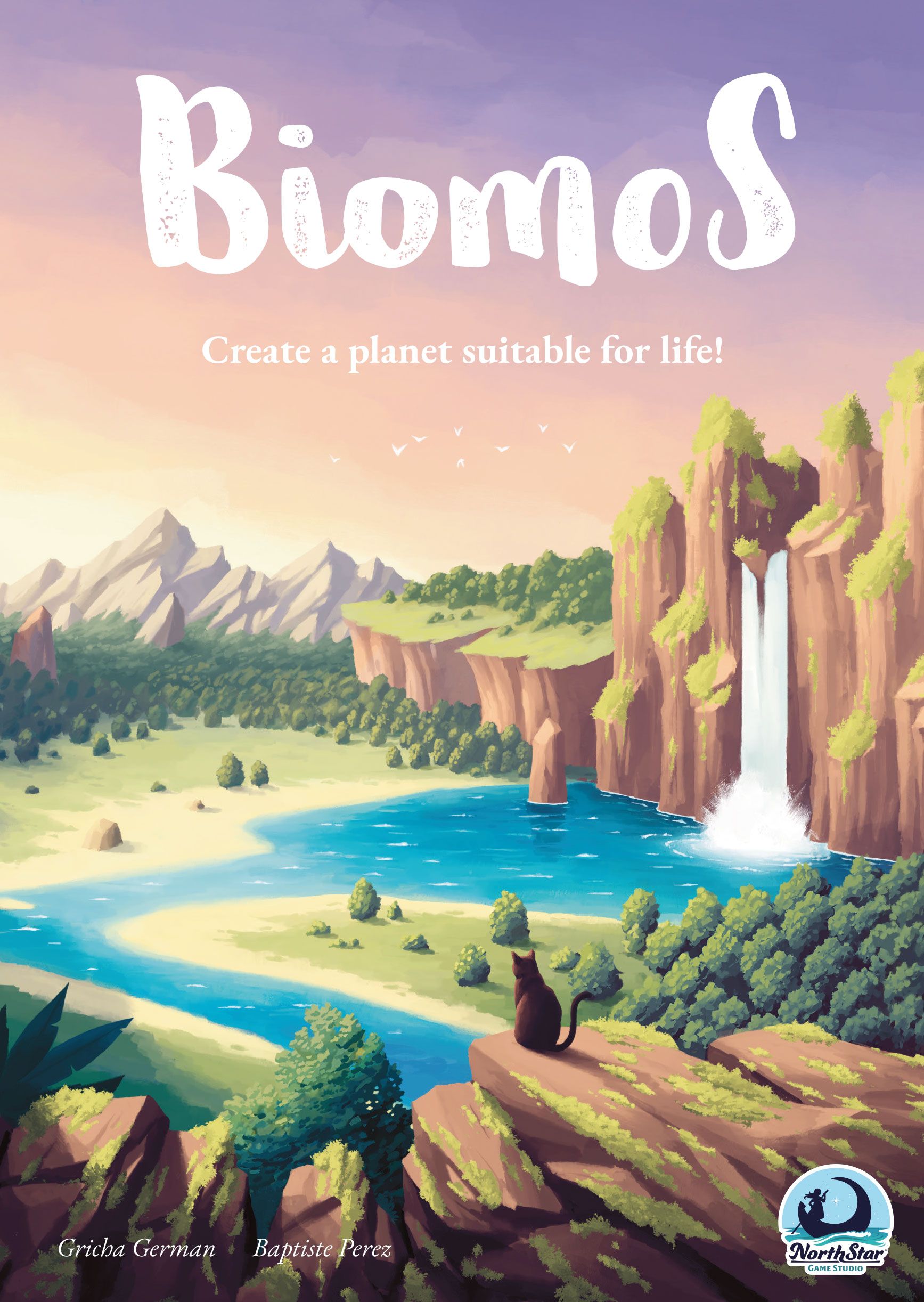
Biomos
Biomos is a 1-4 player cozy and addictive puzzle game about developing new planets. As your planet reaches its first billion years, you will take on the universe’s greatest challenge: creating life. Choose and place terrain tokens on your planet to create stunning landscapes. Combine terrain like oceans, forests, and mountains to match specific biome conditions and foster new life on its surface. Including three ways to play, Biomos features a Family mode for newer players and a Solo mode for an individual challenge. Whatever mode you choose, you will always work towards the same goal: Developing the most biodiverse planet!

Bandits on Mars
From the publisher: Bounty hunters, welcome to Mars, your occasion to make a bounce of money is standing right in front of your eyes! In Bandits on Mars you will play the role of smart gunners hunting cyber bandits that are hiding inside Woodburg's Wild West Theme Park. To get them, broken or alive, you can count exclusively on your feline reflex and on the eye of the finest sniper in Mars, in addition with a good memory. The bandits will try to hide them self as soon as they have a chance, coming back in the open only for a nice royal rumble. Use at best the sheriff's help, hoping that he won't be charmed by the beautiful saloon's dancers, while the bandits that you chase down try to escape riding their rocket bull. Bandits on Mars is a game of dexterity and memory that links your ability in chasing the right bandits at the right time with the ability to remember where they are hidden.
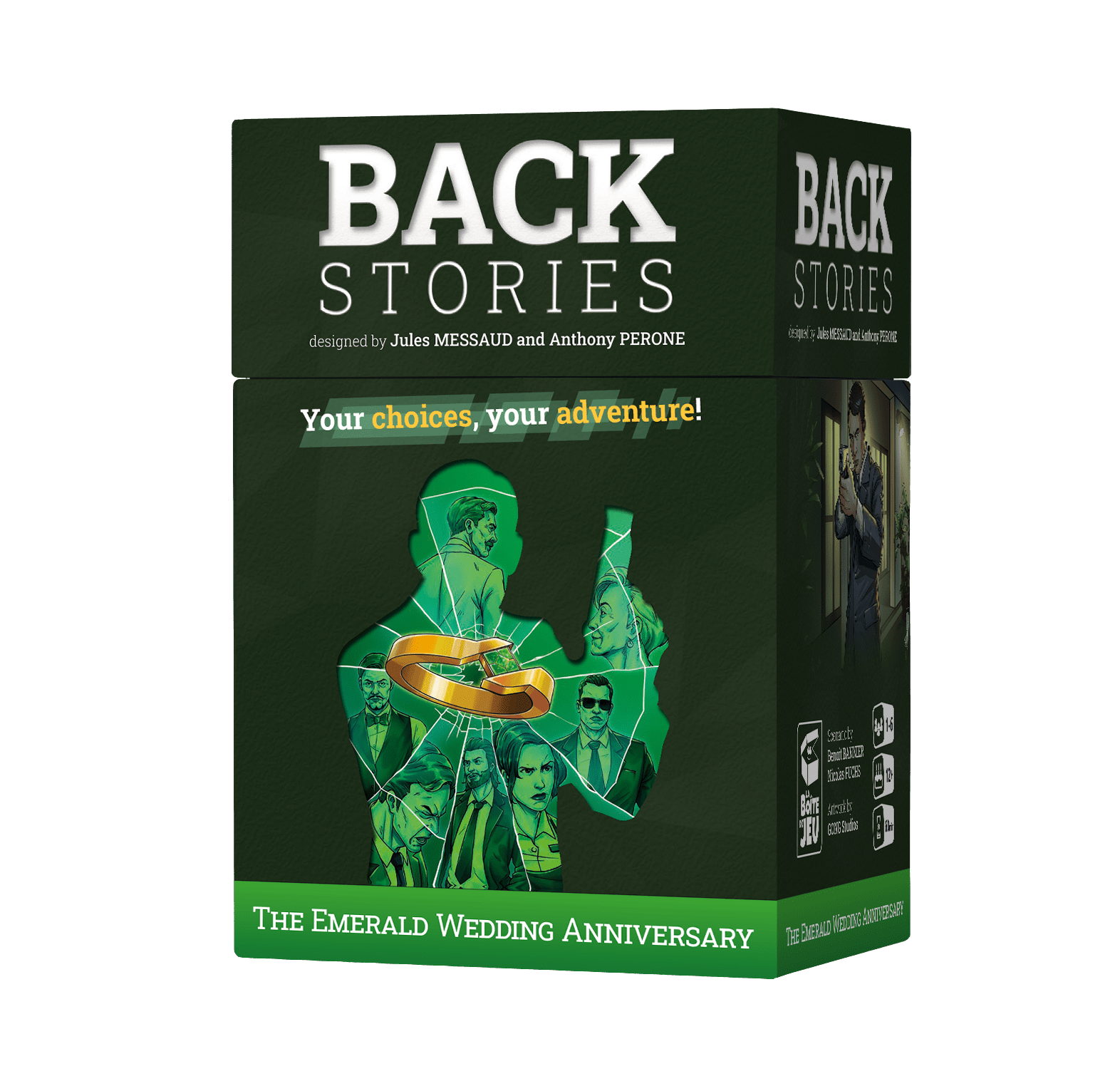
Backstories: The Emerald Wedding Anniversary
As the elite agent Nyx in Backstories: The Emerald Wedding Anniversary, you must thwart the dark machinations of the fearsome General Darcosa. Infiltration, discretion and composure will be your allies to sneak into his lair, dodge his formidable traps, and steal the precious Top Secret hard drive. Backstories is a co-operative adventure game series that works the same way as a "point & click". Thanks to a clever system of perforated cards, you will reveal the consequences of your choices. Choose an action (perforated) card (Search, Talk, Explore, etc.), place it on the back of a location card, and have a look at the result of your choice! Several endings are possible.
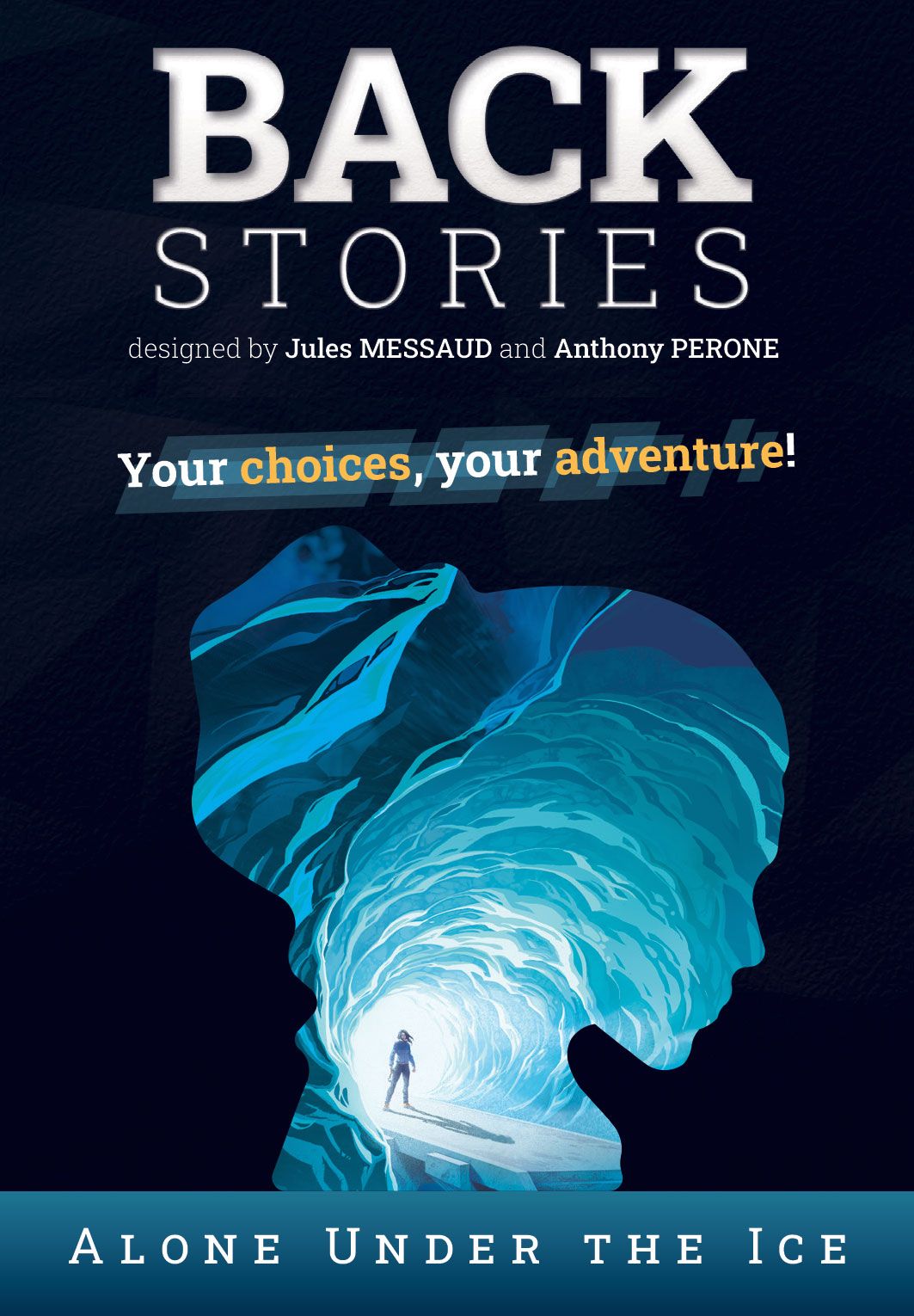
Backstories: Alone Under the Ice
Your brother is missing! Your only lead? A letter he sent you from Mont-Blanc, he talks about his research and a Nazi treasure lost for 50 years. Here you are at the top of Europe to investigate. To find him, explore the mysteries that have lain dormant up there for so many years. Discover the first adventure in the BACKSTORIES Saga: Alone under the Ice! How to Play ? Backstories is a game with mechanisms as simple as they are revolutionary: a bit like you would do in a Point & Click video games, interact with your environment as you progress through your thrilling adventures. Some cards (Panorama) represent the environment in which you’re evolving. Other cards (Actions) are perforated, and represent the actions you can perform (Talk, Search, Objects in your possession, etc.). To interact, all you have to do is place a perforated card on the back of the Panorama card you’re interested in, then turn the card over and read the result of your choice. Be careful, though: in every scenario you play through, each of your choices will have real consequences… Be ready to face them! In Alone under the Ice, you play the role of Sophie. Set out to find your brother Jean, who has disappeared under mysterious circumstances. The latest news you’ve received comes from a refuge on the summit of Mont-Blanc, via a letter Jean sent you. It seems he was looking for a treasure lost since the 1940s: The amber Chamber! Now it’s up to you! And remember: Your choices, Your Adventure! —description from the publisher

Arctic
White, white, nothing but white. You scan the snowy expanse of the Arctic, hoping to catch a glimpse of the inhabitants that live there. The more animals of a type that you see together, the better — yet you also want to diversify your sightings, while moving your totem animal toward the pack ice as far as possible. In Arctic, you move across the landscape and spot animals, creating a pile of animal cards in front of you. The card on top of your personal pile is your "visible" animal card. Each animal card contains four pieces of information: A placement value The main animal depicted on the card A companion animal A draw value At the start of your turn, place as many cards from your hand into your personal pile as the placement value of your visible animal card. (On your first turn, place one animal from your starting hand of three cards.) For each card you can't place, draw a card facedown from the deck and place it in a personal penalty pile. Next, using your new visible animal card, move the token of the main animal forward one space on the landscape and the companion animal backward one space or vice versa. Finally, draw as many animal cards from the "river" of six animal cards as the draw value of your visible animal card. (If you now have more than seven cards in hand, discard into your penalty pile until you have seven.) Each time you place an animal on your pile, take the matching animal power card from the center of play or whoever currently has it. You can use the listed power each turn for as long as you hold this card, such as moving an animal token an additional space, drawing from your penalty pile, or refilling the river after each card you draw. When the deck runs out, you finish the round, then place cards one more time, then score points. For each type of animal, you score points based on the largest set of consecutive cards of this type you have in your pile. You score a bonus based on the number of sets you've completed. Reveal the animal token you received at the start of the game, and score based on how far it advanced across the landscape. Lose 1 point for each card in your penalty pile. Whoever has the highest score wins.
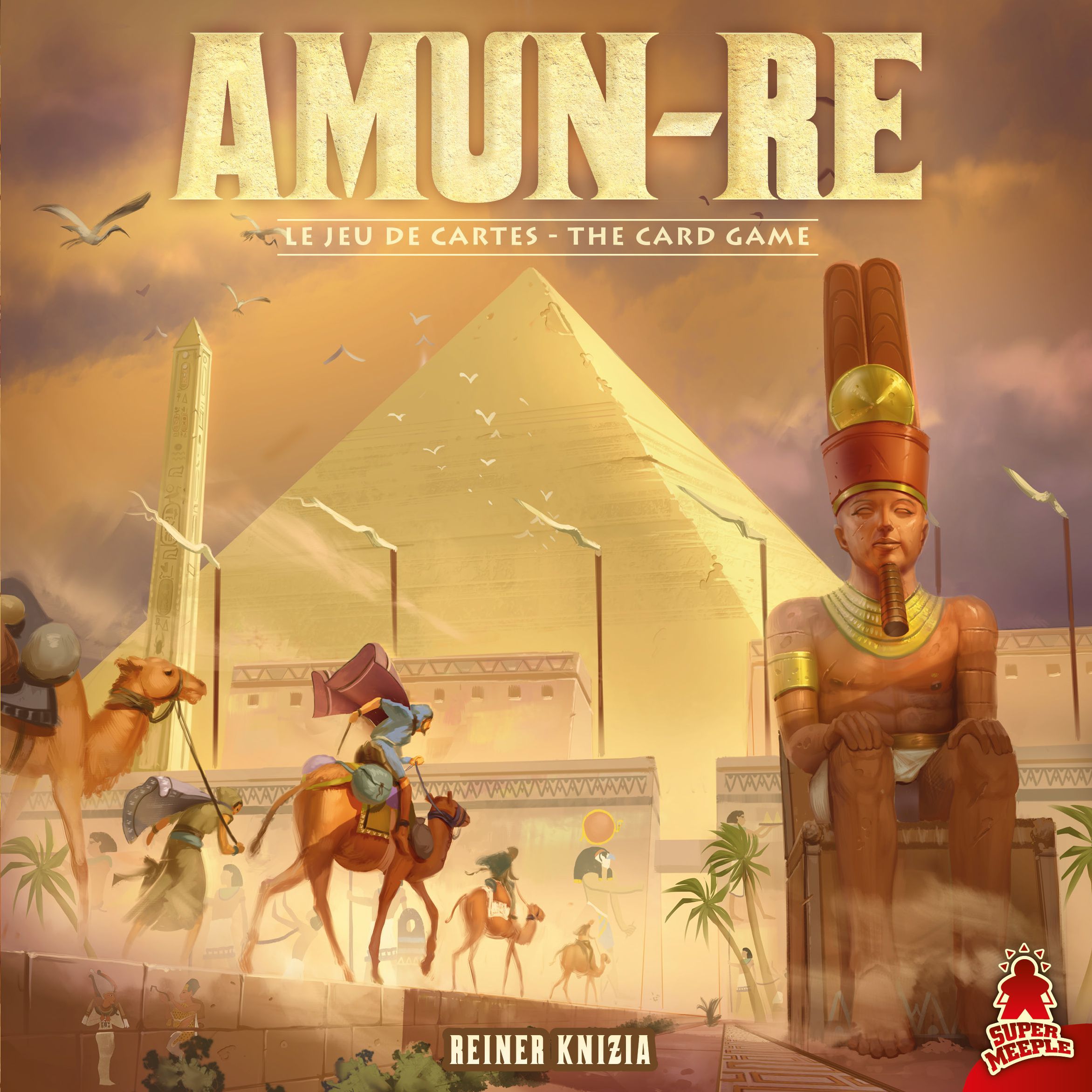
Amun-Re: The Card Game
Amun-Re: The Card Game is a card-based version of Amun-Re, and the auction at the heart of that game is still present in this design, with the results of those auctions driving the rest of the action. In more detail, Amun-Re: The Card Game lasts three rounds, with three auctions in each round, followed by other actions, then a scoring. Each player starts the game with money cards valued 0-8, and at the start of the game, everyone chooses money cards that sum to 14 (with the 0 being included) and lays those cards face up on the table. Province cards equal to the number of players are revealed, and players take turns bidding on provinces by placing exactly one money card next to one province, outbidding an opponent if someone else has already bid there; if you're outbid, you take back your money card, then bid again on your next turn. Eventually everyone will have bid on separate provinces, after which you discard the non-0 bids, then lay out new province cards and run through two more rounds of bidding. Province cards show different numbers of pyramids, ankhs, and fields, with a caravan possibly being visible as well. Whoever has the most ankhs visible is Pharaoh, going first in each action with ties broken from the Pharaoh going clockwise. After three rounds of auctions, players will have some amount of money (possibly only the 0) still in hand. Everyone simultaneously makes an offering of gold, and the sum of the offerings determines how much the Nile floods, which determines how much money players will earn from fields. If the sum is 10 or less, players with caravans receive 10 gold per caravan. Whoever offers the most gold receives three pyramids to place on their province cards, with others receiving two and one pyramids. In player order, players determine their income level, then spend gold to build pyramids on their cards (distributing them as equally as possible), then they take money cards into their hand to account for any income not spent. They then score points for sets of pyramids, for having nine or more fields, and for having the most ankhs. The second and third rounds of the game play out similarly, except that when you claim cards following the auction, you place these province cards on top of your previous province cards so that only the imprinted and acquired pyramids are visible. Everything else is buried in the sands. You score again at the end of each of these rounds, then the player with the most points wins.